
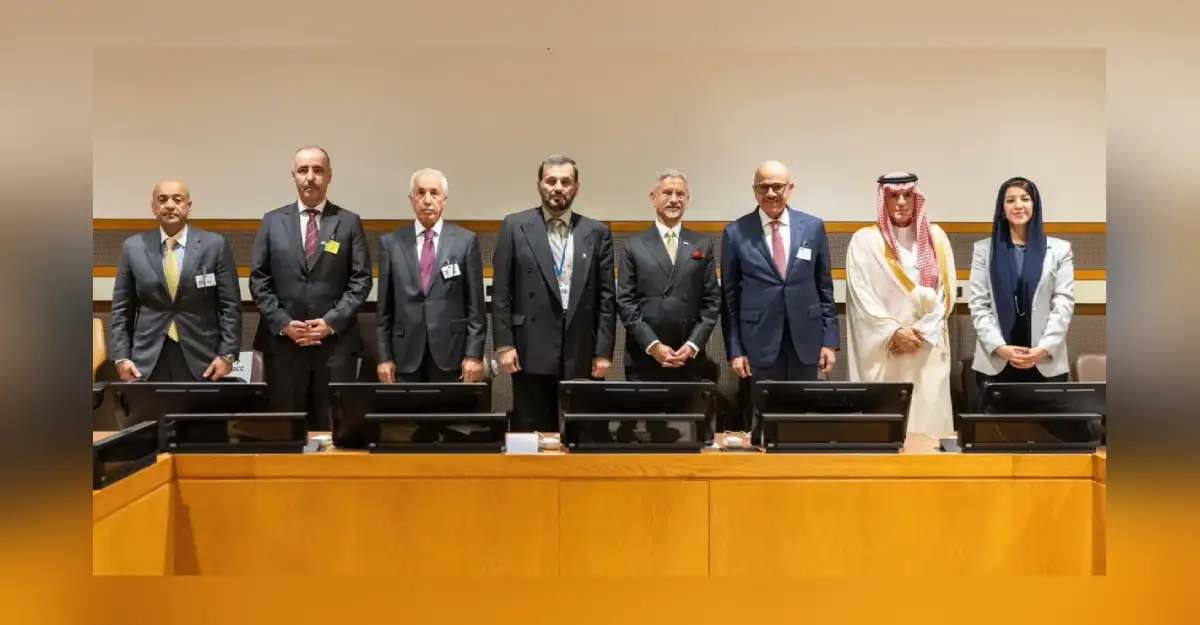
NEW YORK — India and the Gulf Cooperation Council (GCC) marked a major milestone in their strategic partnership on Thursday, September 25, 2026, officially welcoming the launch of negotiations for a bilateral Free Trade Agreement (FTA).
The announcement was made during the India-GCC Troika Ministerial Meeting held on the sidelines of the 81st Session of the United Nations General Assembly (UNGA 81) in New York. The meeting was co-chaired by India’s External Affairs Minister, Dr. S. Jaishankar.
The GCC delegation at the Troika-level was led by Dr. Abdullatif bin Rashid Al Zayani, Foreign Minister of Bahrain; Jasem Mohamed Albudaiwi, Secretary General of the GCC; and Adel Al-Jubeir, Minister of State for Foreign Affairs of Saudi Arabia. Representatives from the UAE, Qatar, Oman, and Kuwait also participated in the high-level talks.
FTA Negotiations and Economic Growth
A key highlight of the dialogue was the formal kickoff of the India-GCC FTA negotiations, which follows the finalization of the Terms of Reference (ToR) earlier in February 2026. Both sides noted that a finalized FTA would act as a major catalyst for economic integration, diversifying exports and boosting bilateral trade, which reached USD 178.66 billion in the 2025–26 financial year.
Reaffirming their commitment to the India-GCC Joint Action Plan (JAP) 2024–2028—originally adopted during the inaugural Strategic Dialogue in Riyadh in September 2024—the leaders reviewed progress across key sectors, including political dialogue, trade, agriculture, energy, health, transportation, and education.
Maritime Security and Energy Resilience
Addressing the recent security challenges and conflict in West Asia, Dr. Jaishankar expressed gratitude to the GCC nations for ensuring uninterrupted supplies of energy and fertilizers to India despite disruptions along crucial global trade routes.
Both sides reiterated a firm commitment to freedom of navigation and the safety of seafarers and commercial shipping in international waterways. Looking ahead, the leaders agreed to broaden their energy partnership into clean transition areas, including renewables, biofuels, and green technologies.
Diaspora Welfare and Cultural Ties
Dr. Jaishankar extended special thanks to the GCC leadership for protecting the welfare, safety, and well-being of the large Indian diaspora residing in the Gulf region during recent regional instability.
The ministers resolved to further enhance people-to-people connections through joint cultural initiatives spanning art, heritage, yoga, music, cinema, and literature.
Regional Peace and Future Roadmap
During wide-ranging discussions on global and regional issues, the leaders emphasized the imperative of regional peace, advocate for dialogue and diplomacy to resolve conflicts, and called for the reform of multilateral institutions.
Ending on a constructive note, both India and the GCC agreed to convene the second edition of the India-GCC Joint Ministerial Meeting for Strategic Dialogue at an early date.
Leave feedback about this