
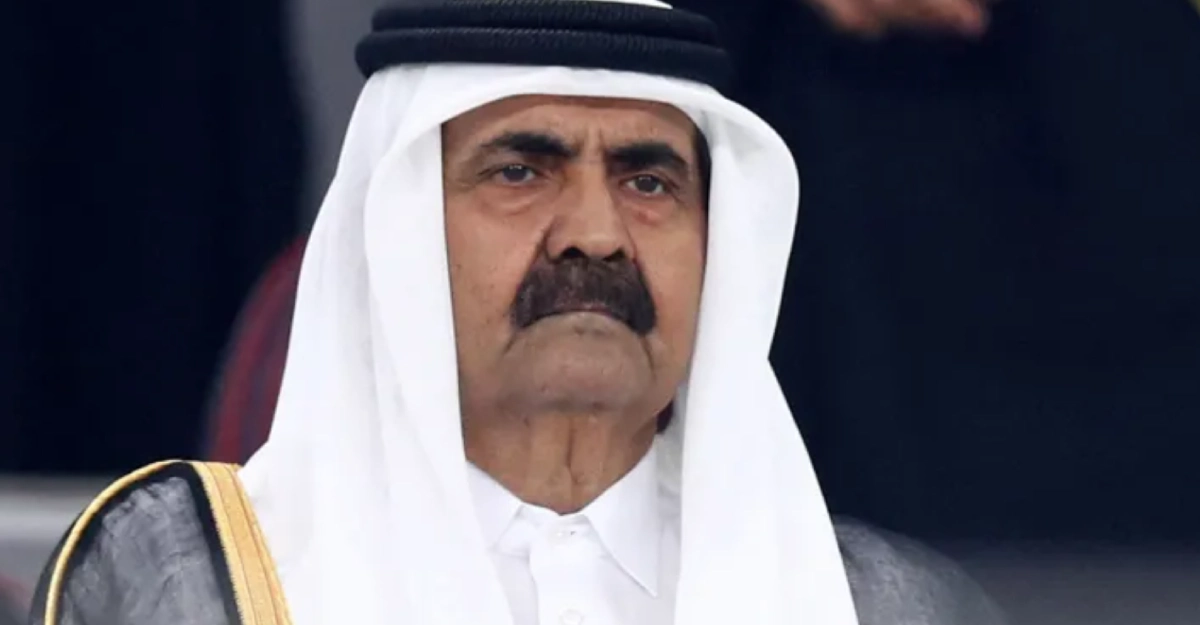
The passing of Qatar’s Father Emir, Sheikh Hamad bin Khalifa Al Thani, at the age of 74, marks the conclusion of a transformative chapter in the history of the modern Middle East. Announcing his demise, the Amiri Diwan stated on a Sunday morning, “With hearts steadfast in faith in God’s decree and destiny, the Amiri Diwan mourns the great loss to the nation.” While world leaders—including Egyptian President Abdel Fattah el-Sisi, Pakistani President Asif Ali Zardari, and UAE President Mohamed bin Zayed Al Nahyan—poured in their deepest condolences, political analysts globally turned their eyes to the profound visual and geopolitical map Sheikh Hamad left behind.
Sheikh Hamad was not merely a hereditary ruler; he was the primary architect who effectively revolutionized Qatar out of its modest Bedouin background, transforming it into one of the world’s wealthiest, most influential, and technologically sophisticated nations.
The Catalyst for an Economic Miracle
When Sheikh Hamad assumed the reins of power on June 27, 1995, Qatar stood at a critical historical crossroads. Recognizing the volatile nature of relying solely on traditional resources, he looked toward the sea—specifically to the massive North Field. Under his visionary stewardship, Qatar embarked on a hyper-accelerated infrastructure boom.
By 1996, the country initiated its first exports of Liquefied Natural Gas (LNG). What followed was a historic economic leap:
Explosive GDP Growth:
During his reign from 1995 to 2013, Qatar’s Gross Domestic Product skyrocketed by more than 24-fold.
Unprecedented Wealth:
Per capita GDP grew roughly six-fold, making Qatari citizens among the wealthiest on earth.
LNG Dominance:
By 2006, Qatar secured its spot as the world’s largest exporter of LNG, eventually topping a production capacity of 77 million tons per annum by 2010.
To safeguard this astronomical wealth for future generations, he established the Supreme Council for Economic Affairs and Investment in 2001, diversifying local and foreign assets to ensure the state became a global investment powerhouse.
Weaponizing ‘Soft Power’ and Media Autonomy
Sheikh Hamad understood that in a region dominated by larger neighbors, a small nation’s ultimate shield is its global relevance. He mastered the concept of “soft power” through two monumental achievements: international media and sports.
In 1996, he abolished the local Ministry of Information, scrapped press censorship, and funded the launch of Al Jazeera. The network broke traditional Arab state-media molds, broadcasting unfiltered perspectives that challenged regional autocracies and shook global status quos. Simultaneously, he positioned Qatar as a global cultural and sports hub, culminating in Qatar’s historic, ambitious bid that secured the hosting rights for the 2022 FIFA World Cup—the first ever held in an Arab or Islamic nation.
Bold Diplomacy and the Arab Spring
On the global stage, Sheikh Hamad carved out an incredibly independent, often non-traditional foreign policy. Qatar became the region’s premier diplomatic broker, successfully mediating complex conflicts ranging from the Darfur crisis in Sudan to factional feuds in Lebanon, and the rift between Palestinian factions Hamas and Fatah. Notably, his administration allowed the Afghan Taliban to open a political office in Doha, setting the stage for the historic U.S.-Taliban talks.
When the popular uprisings known as the “Arab Spring” erupted across the region, Sheikh Hamad broke ranks with fellow Gulf monarchs. Instead of status-quo containment, Qatar actively backed the pro-democracy movements. Al Jazeera broadcasted anti-government protests live to millions. In Syria, Doha severed ties with Damascus over Bashar al-Assad’s violent crackdowns, and in Libya, Qatar openly supported the NATO military mission that led to the overthrow of Muammar Gaddafi.
Yet, the cause closest to his heart remained the Palestinian struggle. Showing definitive support, he became the first head of state to visit Gaza in over a decade in 2012, cementing a legacy that saw towns in Gaza and Southern Lebanon named in his honor.
A Rare and Smooth Succession
Perhaps the most defining attribute of Sheikh Hamad’s political brilliance was how he chose to leave office. In a region where rulers traditionally held onto power until death, Sheikh Hamad voluntarily and peacefully abdicated the throne on June 25, 2013.
At just 61 years old, he handed power to his 33-year-old, British-educated son, the current Emir Sheikh Tamim bin Hamad Al Thani. “The future lies ahead of you, the children of this homeland, as you usher into a new era where young leadership hoists the banner,” he famously announced.
Through this carefully managed transition, he ensured domestic stability while institutionalizing his lifelong project: the Qatar National Vision 2030, aimed at transitioning the state into an advanced, sustainable, knowledge-based economy. Though the Father Emir has passed, the hyper-modern skyline of Doha and Qatar’s formidable seat at the table of global geopolitics stand as enduring monuments to his 74 years of life.
Leave feedback about this