
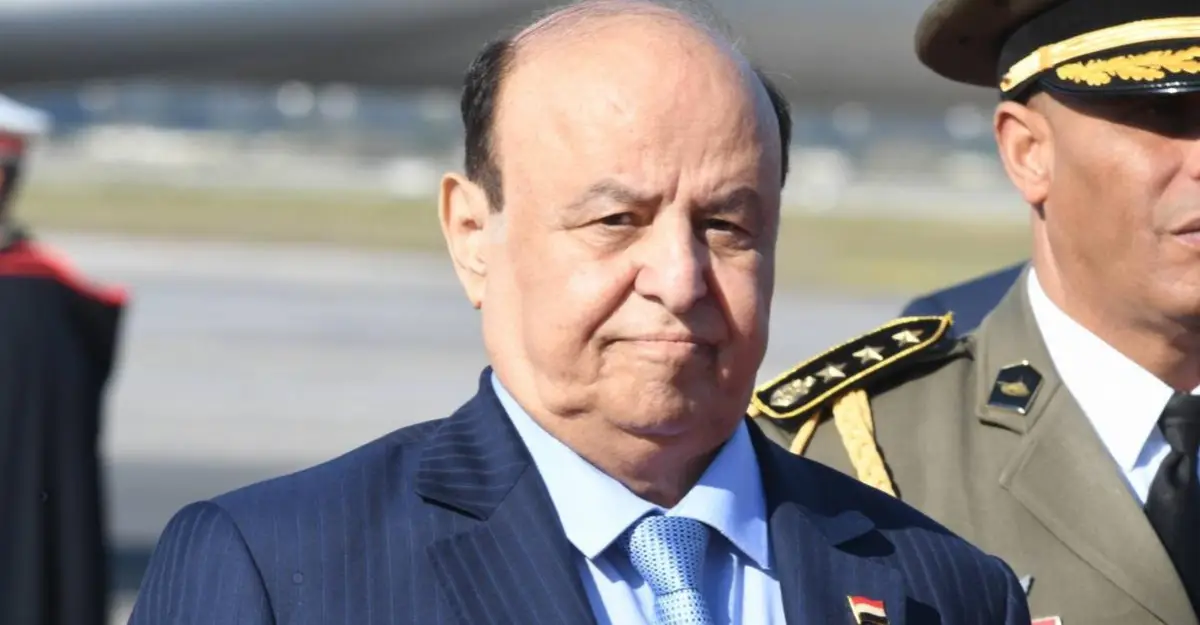
RIYADH: Abdrabbuh Mansour Hadi, the former President of Yemen and a central figure in the country’s modern political history, passed away on Thursday. He was 80. Yemeni presidential sources confirmed that Hadi suffered a sudden health emergency in the Saudi capital of Riyadh, where he was rushed to a hospital but could not be revived. Hadi, a veteran statesman, also held the distinguished military rank of Field Marshal of the Yemeni Armed Forces.
Following the announcement, the Custodian of the Two Holy Mosques, King Salman bin Abdulaziz, and Crown Prince Mohammed bin Salman offered their deepest condolences to the government and people of Yemen. In their message, they affirmed the Kingdom of Saudi Arabia’s unwavering solidarity with Yemen during this difficult time, sharing in the nation’s sentiments of profound sorrow.
From Military Command to the Vice Presidency
Born on September 1, 1945, in the Abyan Governorate of South Yemen, Hadi graduated from a military academy in 1966 and rose to the rank of Major General in the South Yemeni military. He entered the national political spotlight during the historic 1994 civil war, where he staunchly supported then-President Ali Abdullah Saleh. Following the conflict, he was appointed Defense Minister and subsequently assumed office as the Vice President of Yemen in October 1994. He served loyally in this position under Saleh for nearly two decades until 2012.
Presidency and Anti-Terrorism Campaigns
Following the 2011 Arab Spring uprisings that forced Ali Abdullah Saleh to step down, a transitional presidential election was held in February 2012. Running as the consensus candidate of the General People’s Congress party, Hadi secured an overwhelming 99.8% of the vote, officially becoming the second President of Yemen. Immediately upon taking office, he launched aggressive military campaigns against Al-Qaeda in the Arabian Peninsula (AQAP), which posed a severe threat to the nation’s stability.
The Houthi Coup and Exile in Riyadh
Hadi’s administration faced severe economic challenges, and his decision to lift fuel subsidies triggered widespread public protests. Exploiting this unrest, the Iran-backed Houthi rebels seized the capital city of Sana’a between late 2014 and early 2015, placing Hadi under house arrest. However, he managed to escape to the southern port city of Aden, where he rescinded his forced resignation and declared the Houthi takeover an illegal coup.
As the conflict escalated and a Saudi-led military coalition launched an intervention in March 2015 to restore his government, Hadi relocated to Saudi Arabia. He spent the next decade in Riyadh, leading Yemen’s internationally recognized government-in-exile.
Power Transition and Legacy
In a definitive move aimed at ending Yemen’s prolonged civil war and reviving stalled peace talks, Hadi took a historic step in April 2022. He formally transferred all his executive presidential powers to a newly formed Presidential Leadership Council, led by Rashad al-Alimi, and officially stepped down. Having steered Yemen through one of the most volatile and crisis-ridden chapters in its history, Field Marshal Hadi’s passing marks the end of a defining political era for the nation.

Leave feedback about this