
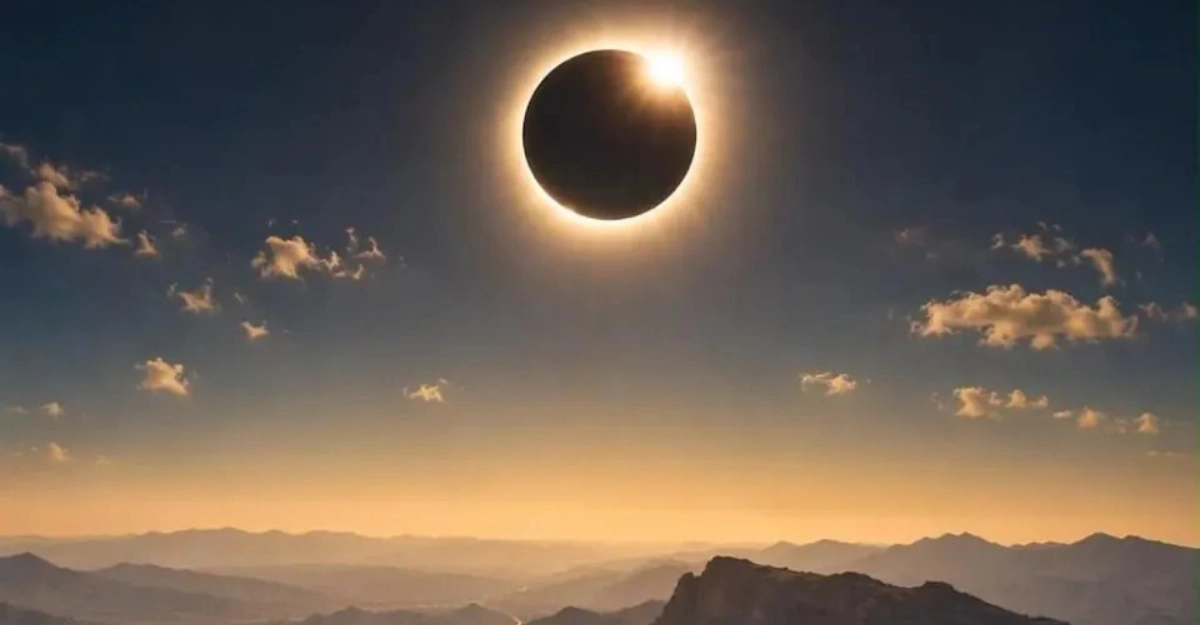
JEDDAH: Saudi Arabia is gearing up to witness a historic and exceptionally rare total solar eclipse on August 2, 2027. Termed by the Saudi Space Agency as the most significant astronomical phenomenon of the 21st century, the event will plunge several regions of the Kingdom into temporary darkness, marking a historic milestone not witnessed in the country for over 75 years. It will also stand as one of the longest total solar eclipses of this century.
The entire eclipse event across the Kingdom will begin at 11:41 am AST and conclude by 3:00 pm AST, with the peak phase of totality occurring between 1:21 pm and 1:44 pm AST.
City-Specific Timings and Totality Schedules
The exact eclipse times, duration, and degree of darkness depend heavily on the geographical coordinates of each city. The tracking schedule for major cities includes:
- Jeddah: Partial phases begin at 12:00 noon. Total darkness (totality) will start at 1:25 pm and end at 2:43 pm AST.
- Mecca: Partial phases begin at 12:01 pm. Total darkness will start at 1:26 pm and end at 2:44 pm AST.
- Taif: Partial phases begin at 12:03 pm. Total darkness will start at 1:28 pm and end at 2:45 pm AST.
- Khamis Mushait: Partial phases begin at 12:13 pm. Total darkness will start at 1:37 pm and end at 2:54 pm AST.
The total solar eclipse will be visible across vast stretches of the western and southern regions of Saudi Arabia, with southern areas experiencing up to six minutes of complete darkness. This unusually long duration offers researchers and astronomy enthusiasts a golden opportunity to study the solar corona. The maximum duration of the eclipse globally will be recorded in neighboring Egypt.
In contrast, the rest of the Kingdom—including the central, eastern, and northern regions—will experience a partial solar eclipse, reaching up to 80% obscuration in some areas.
Path of Totality: Affected Regions
According to Engineer Majed Abu Zahra, President of the Jeddah Astronomy Society, the path of totality will originate from the Red Sea coast and sweep across numerous cities and governorates:
- Major Cities: Mecca, Jeddah, Taif, Al Baha, Khamis Mushait, Jizan, and Najran.
- Other Covered Areas: Tuwal, Dahban, Asfan, Khulais, Jumum, Bahrah, Al Hada, Al Shafa, Al Lith, Al Mandaq, Baljurashi, Majardah, Al Qunfudhah, Sabt Al Alaya, Al Namas, Tanuma, Bariq, Ahad Rafidah, Baish, Sabya, Dhahran Al Janoub, Sarat Abidah, Haradh, Ghran, and Ghameeq.
Temperature Drop and Visibility of Stars
During the peak phase of the total eclipse, daylight will rapidly transition into twilight, accompanied by a noticeable drop in both light intensity and temperature. The sun’s outer atmosphere, the solar corona, will become visible, and bright stars and planets will momentarily appear in the daytime sky.
Saudi Space Agency Safety Advisory: Looking directly at the sun during the eclipse can cause permanent eye damage. The public is strictly advised against viewing the phenomenon with the naked eye. Observers must use certified eclipse glasses or binoculars equipped with specialized solar filters.


Leave feedback about this