
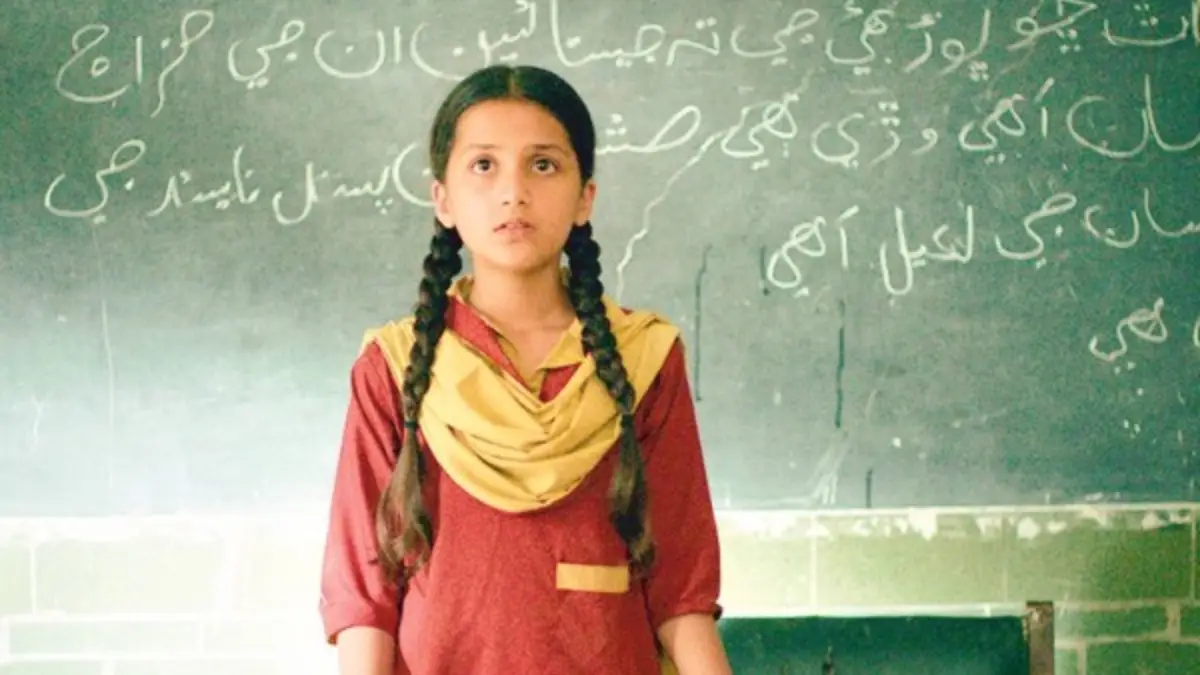
Ten-year-old Rabia walks to school with her backpack slung over her shoulder, just like any other morning in her village in Pakistan. But the familiar routine comes to an abrupt halt. The school gates are shut. A lone guard stands outside, unable to offer any clear explanation to the gathering of anxious parents and confused children. The teachers are gone. The principal is nowhere to be seen. The school, they are told, is haunted.
Rabia returns home, disappointment clouding her young face. Soon after, her mother sends her out again—this time to deliver food to her father, who has gone fishing at the harbor, and to buy vegetables on her way back. It is during this journey that Rabia’s curiosity turns into resolve. Determined to uncover the truth behind her school’s sudden closure, she decides to investigate the rumors of a jinn haunting the building.
On her way, Rabia seeks out the school porter, asking for directions to her teacher’s house. The village whispers say that the teacher, too, is possessed by a jinn. Undeterred, Rabia climbs the hillsides of her village to meet her—and discovers that her teacher is neither haunted nor missing by choice. Her search does not stop there. The fearless child goes on to visit the school principal, a powerful landlord, and even the district magistrate in his office.
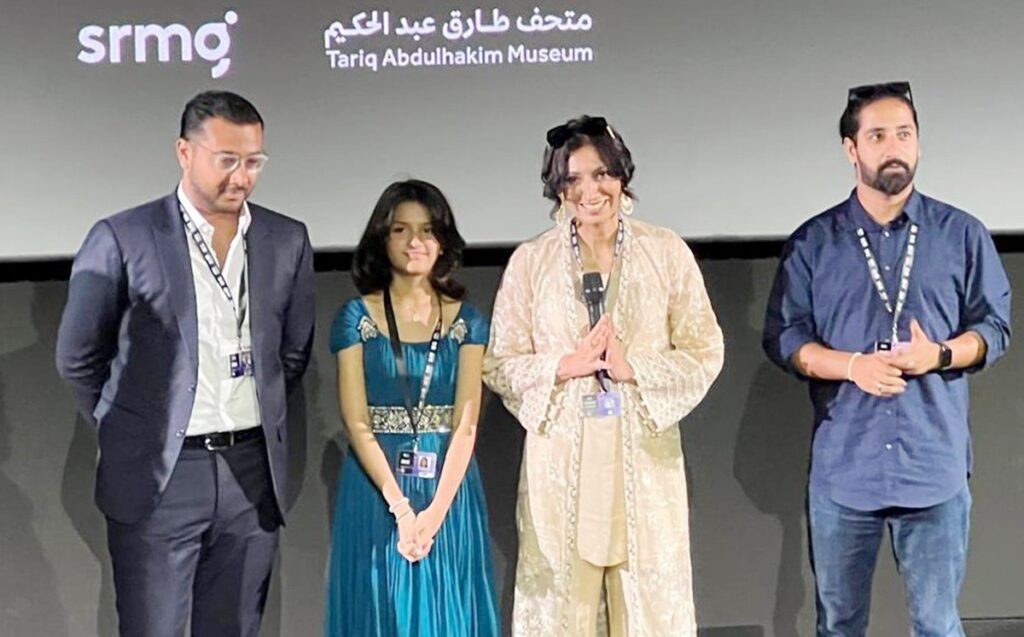
These moments form the emotional core of Ghost School, the latest film by acclaimed Pakistani-British director Seemab Gul, screened to warm applause at the 5th Red Sea International Film Festival in Jeddah. Told through the eyes of a child, the film blends innocence with quiet defiance, turning a deeply political issue into a moving human story.
Set in rural Pakistan, Ghost School portrays a society where girls’ education is fragile and often discouraged, and where women’s lives are expected to revolve around marriage alone. When a neighboring girl casually asks Rabia whether she will attend her wedding—and jokingly hints that Rabia’s turn will come soon—the child firmly corrects her. Rabia’s world is shaped instead by her mother’s quiet resilience and her own desire to learn.
At its heart, Ghost School follows Rabia’s determined effort to reopen her abandoned school—one among thousands labeled as “ghost schools” across Pakistan. These are institutions officially closed due to alleged jinn infestations, but in reality victims of neglect and corruption.
“In the beginning, this was meant to be a documentary,” Seemab Gul told The Saudi Updates. “But as the research progressed, I felt this story needed a broader canvas. A feature film could reach people more deeply and emotionally.”
According to official estimates, nearly 30,000 schools in Pakistan have been abandoned under the pretext of supernatural fears, denying education to more than 22 million children. The film subtly exposes a darker truth: teachers and administrators often continue to draw salaries long after schools are shut, sustained by a network of corruption involving officials and local elites.
Running for 88 minutes, Ghost School is presented with Arabic and English subtitles. The film stars Nasuwalia Arsalan as Rabia, alongside Sameena Sehar, Adnan Shah Tipu, Wajdan Shah, Mohammad Zaman, Mohammad Sayan, Kehan Naqvi, Taha Khan, Ziyarat Gul, Tariq Raja, and Tutu Baba. Seemab Gul himself serves as writer and producer.
A graduate in Fine Arts and Filmmaking from the London Film School, Seemab Gul is no stranger to international acclaim. His short film Sandstorm premiered in Venice in 2021, screened at over 100 international festivals including Sundance, and earned multiple awards, including Oscar-qualifying recognitions. His documentary Zahida aired on Al Jazeera in 2018, while his work has also been featured on Canal Plus, The New Yorker, and Vimeo Staff Picks.
With Ghost School, Seemab Gul delivers a quietly powerful film—one that uses a child’s courage to question superstition, corruption, and the systemic denial of education, reminding audiences that sometimes the bravest resistance begins with a schoolbag and a simple question: Why is my school closed?
Leave feedback about this